Showing posts with label movies. Show all posts

Monday, August 22, 2011

Review: The Road

The Road
The Road by Cormac McCarthy

My rating: 2 of 5 stars

My sister, April, recommended this book to me. She gave it four stars. I have to disagree with her however. I read most of this book while I was traveling. I read it while in airports, on flights and in a hotel room. I was also usually sleepy while reading. Perhaps I just missed the coherent plot.

The book is set in a post-apocalyptic world. The narrator and his son are traveling the main road of the title. They are usually cold and are traveling south in search of warmer weather. They are also usually hungry, so along the way, they search for food and supplies while doing their best to avoid disagreeable characters who would like to do them harm such as eating them to satisfy their own hunger.

What caused the state of the world does not seem to be unknown to the characters in the book, but nobody bothers to share that information with the reader. Ash covers everything, and people wear masks or breathing apparatuses to keep from breathing it. However, the source of the ash is left unknown. Did a supervolcano erupt or did a giant asteroid crash into the Earth like the KT event that wiped out the dinosaurs? One of the categories listed in the Library of Congress information in the front of the book is "Voyages and travels - United States". I do not think it was established for certain that the location was the United States. The characters speak English, but I think somebody reading a translation of the book would think the location was some other country. There are a couple of references to Spanish including the son finding a coin with Spanish writing. Perhaps our travelers made it all the way to Mexico or perhaps some Latin American country or countries attacked the US which then retaliated with atomic weapons and thus brought about nuclear winter. That would also help explain why the cities seem to be in ruins.

I will grant that establishing the reason for the dystopian environment is frequently not a top priority in many works of the post-apocalyptic genre. For instance, I do not remember if it was established why society broke down in the Mad Max movie franchise. In more recent movies and televisions series, the situation is caused by an alien invasion or a rampant disease that created zombies or vampires. In the Kevin Coster epic Waterworld, the polar icecaps melt and cover the world with undrinkable seawater. I assume global warming caused the icecaps to melt, but that is a political argument which is not relevant here. Anyway, I think all of those reasons can safely be eliminated as culprits for the world of The Road. The reader is left either wondering or simply not caring.

Another problem that I have with the book is the author's writing style. I have not read any of Cormac McCarthy's other works, but this book has a distinctly spare style. I suppose when the world goes to hell in a handbasket, the first thing that will be lost is punctuation. The lack of quotation marks is particularly annoying and makes the dialogue difficult to follow. Another casualty of the breakdown is names, both for people and locations. The lack of place names leads to the ambiguity in regards to the settings for the book. Neither the man, his son, nor the dead wife and mother are named in the book. The only character to be named in the book is a stranger that the two main character encounter near the end of the book. The man gives his name as Ely, but it is quickly established that he is lying. I suppose that names are irrelevant in this new world.

The book is very emotional and runs the gamut of emotions with some scenes that are touching, some that are exciting, and some that are very disturbing. While the relationship between the father and the son is the primary focus, the book also does a good job of expressing the stress associated with fighting for survival in that trying environment. I found the ending of the book to be anticlimactic except that would imply there was a climax. Like a starving man in a post-apocalyptic world, the book does not end as much as it just slowly curls up and dies.

View all my reviews

Saturday, June 18, 2011

Review: Goldfinger

GoldfingerGoldfinger by Ian Fleming

My rating: 4 of 5 stars

I have found a third book that runs counter to the conventional wisdom that books are always better than their movie versions. The first two entries on my list are Forrest Gump and Shoeless Joe which was the basis for the movie Field of Dreams. While I enjoyed both of those books, the two movies are classics. The movie version of Forrest Gump won six Oscars among its myriad of other awards, and Field of Dreams is constantly ranked as one of the best sports movies of all time.

Goldfinger follows the same pattern. I truly enjoyed the book, as I have the previous six James Bond novels that I have read so far. However, the movie version is one of my favorite movies. Of course, the Bond books and movies are really completely different animals. Sean Connery in particular portrays Bond with super-human cool. The Bond from the novels, on the other hand, is fallible and occasionally shows a bit of emotion. In three of the first seven novels, including Goldfinger, CIA agent Felix Leiter appears at the last minute to save Bond's hide. In the movies, Leiter is usually just tagging along as a sidekick.

Similar to Shoeless Joe missing James Earl Jones' epic monologue on baseball from Field of Dreams, the book version of Goldfinger misses the great quotes from movie. ("No, Mr. Bond. I expect you to die.", "I must be dreaming.")

The plot of the novel and film are basically the same, but there are some differences. In the book, the main villain, Auric Goldfinger, threatens Bond with a giant saw. The movie replaces the saw with an even more intimidating laser in one of most memorable scenes ever. Also, the role of Pussy Galore is quite different. In the novel, Miss Galore is one of the crime lords involved in Goldfinger's plan to break into Fort Knox. In the movie, she is a pilot and leads a flying circus. In both versions, Bond is able to persuade Miss Galore to change sides. The ultimate goal of Goldfinger's nefarious plan is also slightly different between the novel and the book.

Appropriately enough, USA Network was showing Goldfinger as I typed this.

View all my reviews

Saturday, April 30, 2011

More Bond

Back in March, I posted about a bunch basically random topics. One of the topics was about visiting the Reader's Corner, a local used book store, and picking up some books. As an aside, the Reader's Corner also sells books via an Amazon.com site and a site at Abebooks.com. Included in my purchases back in March were the first two books in the James Bond series. Today, I paid another visit to the shop and purchased the next five books in the series. The third book is Moonraker which became the eleventh of the Bond films in 1979. The movie starred Roger Moore instead of Sean Connery who starred in six of the first seven Bond films. Moore's first Bond movie was Live and Let Die which was released in 1973. It was the eighth film but was adapted from the second book. The fourth book in the Bond series is Diamonds Are Forever which became the seventh Bond film in 1971. That film was Connery's last time in the role of James Bond for the official series of films, although in 1983, he starred in Never Say Never Again which is not considered part of the official series.

Moving right along, I mentioned the fifth (From Russia with Love) and sixth (Doctor No) books in my previous post along with the fact that they became the second and first films. Those films were released in 1963 and 1962 respectively. The seventh book in the series is Goldfinger. The film version of that book was released in 1964 and was the third in the series. The movie version of Goldfinger is my personal favorite of the film series. There is the best of the Bond girls, although Entertainment Weekly disagrees. (Their number one isn't bad either.) The title character, Auric Goldfinger, is one of the best of the Bond villains. Of course, the word "auric" means relating to gold. There are also all the great quotes, and the first appearance of the most famous of Bond's cars, an Aston Martin DB5 which had been tweaked a bit by Q.

During my visit to the bookstore, I also bought three other books. Smart-Aleck Kill is a small collection of stories by Raymond Chandler. All four of the stories are also included in The Simple Art of Murder which I have previously read, but this will be a good excuse to read them again. The Turk is about a famous chess-playing machine from the 18th century, all of which can be deduced by the book's full long title. Finally, Zeno's Paradox is about a series of paradoxes postulated by the ancient Greek philosopher Zeno, the most famous of which concerns a race between the Greek hero Achilles and a tortoise.

Monday, March 28, 2011

Number Nine

Today, I cracked open the bottle of home brew which I had labeled with the number 9 ("Number Nine, Number Nine") to indicate that I had added nine carbonation tablets. Nine was the least number of tablets that I used in a bottle. As expected, the result is a very flat beer. The taste is also a bit sour, but I believe that would be relieved with more carbonation. The white specks which are remnants of the Munton's CarbTabs were not an issue with this bottle.

Looking back over some previous posts, I noticed that two recent posts had an interesting and not immediately apparent connection. In a post from March 6, I mentioned that I saw the new Tron movie at the local $1.50 theater. Then on March 12, I posted about the bottle of home brew that contained thirteen carbonation tablets. So what, or more precisely who, is the common connection? That would be the lovely Olivia Wilde, of course. Yeah, yeah, it is a bit of a stretch, but it seemed much more interesting before I started typing this. Anyway, she plays the character Quorra in Tron: Legacy. She is probably most well known from the television show House M.D. where she plays Dr. Remy 'Thirteen' Hadley. OK, enough of that silliness, although I did I get through all that without mentioning that her character is bisexual or linking to her photos in GQ, Maxim and others (oh well).

In other news, I have finally gotten around to ordering myself a new cellphone. I have been with Sprint since I bought my first cellphone quite a few years ago. My current phone is a Sanyo RL-4920 which was originally introduced back in 2004 or so. My current contract with Sprint expired way back in 2007, but I have just never bothered to get a new phone by signing up for a new contract. I recently changed my mind, and today, I ordered the LG Rumor Touch and agreed to a two-year contract. By the way, I got the blue one and not the purple one.

Sunday, March 6, 2011

A Little Bit of This and That

Forewarning, this post has no particular rhyme or reason.

Today, I went to the local $1.50 movie theater and saw Tron: Legacy. While it was a decent movie, it seemed like a great movie to see in 3-D, particularity IMAX 3D. Speaking of IMAX 3D, I have a guy date (is that the proper term or it is man date or bro date?) with one of my coworkers to see Hubble 3D at the local IMAX theater. He said he bought one of those two-for-one deals from Groupon or LivingSocial, but his wife balked at going to the Hubble movie with him. He has not mentioned when he wants to go, but perhaps that will be something to do next week.

Speaking of next week, this Friday marks the return of the friendly neighborhood social gathering. It was previously held every other Friday night, but recently, it has disappeared from the schedule. The last gathering was back in November for the birthday of one of the guys. That event was actually on a Saturday. The last one that I attended prior to that was at the end of July. Now, I have even volunteered to help. I have been managing the invite list, and perhaps in a few weeks, I will even host an event at my place.

Back to today, I stopped by my favorite used bookstore, The Reader's Corner, over on Hillsborough Street. As usual, I picked up a handful of books. This time, my book purchases were in three pairs plus a single. There was a whole stack of Ian Fleming's James Bond paperbacks that were printed in the mid-60s. While I am a big fan of the Bond movies, I have never read any of the books. I was able to control myself and only purchase the first two in the series, Casino Royale and Live and Let Die. Interestingly, those are not the first two that are turned into movies. The first Bond movie was Dr. No which was released in 1962 and was based on the sixth book in the series. The second movie was 1963's From Russia with Love which was the fifth book.

In addition to the two Bond novels, I picked up two books by Gore Vidal, Julian from 1964, and Myra Breckinridge from 1968. I also bought two books on science. One was The Dragons of Eden by Carl Sagan (of "billions and billions" fame). I bought the other science-related book purely for the title, In Search of Schrödinger's Cat by John R. Gribbin. If you do not know about Erwin Schrödinger and his infamous cat, then you should ask somebody (like a physicist) or just look it up on Wikipedia. You might also want to read up on Werner Heisenberg and his uncertainty principle. Moving right along, my final unrelated purchase was The Fourth K by Mario Puzo which is not part of Puzo's Mafia series.

I think that is enough randomness for today.

Thursday, February 3, 2011

The Last Crusade

When I am in the gym, Glenn Beck's television show is usually on the one television tuned to Fox News. While I am on the elliptical machine, I watch Around the Horn and Pardon the Interruption on ESPN, but occasionally during commercials, I switch over to see what Mr. Beck is all teared up about. As one would might expect, Mr. Beck's most recent concern is the forthcoming Armageddon ignited by the troubles in Egypt and somewhat related demonstrations in Tunisia, Jordan, and Yemen. Mr. Beck sees these uprisings as a beginning of an organized attempt by Islamic groups to take over the world.

I really have no opinion on Mr. Beck's concerns. However, as an example of Muslim aggressiveness, he goes all the way back to the Crusades. Now am I not an expert on those religious wars of the Middle Ages, but I am pretty sure all of the Crusades, except the last one, were due to Christian armies invading Muslim territory which in those times included Palestine. The point being that the Crusades were the result of aggressiveness by Christians and not Muslims.

Of course, the Last Crusade is not a war, but the third of the Indiana Jones movies. It's the one where Indiana Jones, played by Harrison Ford in one of his iconic roles, and his father, played by Sean Connery, are searching for the Holy Grail while being pursued by Nazis. The movie has that great line delivered by Connery, "We named the dog Indiana."

Monday, December 13, 2010

Copy Cats

A couple of weeks ago, I stopped by the local movie theater and caught the alien-invasion flick, Skyline. The movie was not particularly good, and its stay in theaters was short. To me, the story and cinematography are reminiscent of the monster flick Cloverfield. The plot revolves around a couple who have flown to Los Angeles for the birthday of the guy's best friend. The friend is some sort of media mogul and is played by Donald Faison who is best known for playing Dr. Turk on the sitcom Scrubs. None of the other actors were familiar to me, but that certainly does not mean they are not well-known.

During the couple's first night in LA, they are awakened by bright blue lights coming through the window blinds. The lights are from spaceships belonging to aliens with not so nice intentions. When people see the mesmerizing lights, their body is frozen in place, and then they are vacuumed up into the ships. The rest of the plot revolves around characters either trying to hide or escape from the aliens. Neither of these approaches are successful. The military also makes some appearances to provide some action but little success. In the end, the audience is left to assume that the aliens were successful in their conquest of the planet Earth and the human species. I am not kidding. Not to worry, there is already a sequel in the works.

One thing that I noticed was the movie depends on the standard signals to inform the audience that the lead female character is pregnant. For anybody that does not grasp the subtleties of Hollywood symbolism, when a woman pukes and/or declines an alcoholic drink, it means that she is pregnant. I think screenwriters go to those wells far too often, but I guess it makes things easy for both the writers and the audience. There are few other reasons for either of those two situations to be worked into a story. I suppose if the story is about a woman recovering from alcoholism, it would be reasonable for her to decline drinks. If a female character is hungover, is being treated for cancer, or is being poisoned, then it is understandable that she would throw up. I think those examples are about it though.

Speaking of regurgitation, it seems increasing popular nowadays for movies and television shows to recycle previous ideas. As I mentioned above, Skyline is basically a remake of Cloverfield with the Godzilla elements replaced with the extraterrestrial elements from Independence Day. Moving over to the small screen, one frequent source of regurgitated ideas for American television shows is the BBC. Some of the best examples are ABC's Who Wants to Be a Millionaire, NBC's The Office, and TLC's Trading Spaces which was based on a BBC show named Changing Rooms. The show What Not to Wear is another example from the network TLC. The original hosts of the British version of that show even went on to have their own show on American television.

The latest show to get the BBC-to-America treatment is Top Gear. The British version of the show is shown here on BBC America. Let me say that I am definitely not a gear-head. I own a 1998 Honda Accord Coupe with peeling paint. It is the EX version with the 3.0-liter V6 engine. That is about all I know about cars. I do not change the oil in my car. The extent of my car maintenance skills are pumping gas, changing wiper blades, adding air to tires, and changing bulbs and fuses. I was quite proud of myself when I replaced the main relay in the Honda. Also, I do not know how to operate a manual transmission. It just seems a bit silly that I would watch a show about high-end sport cars that I would not even be able to drive if I somehow managed to afford. All that being said, I do enjoy the British version of Top Gear.

That enjoyment does not exactly carry over to the American version of the show. I have watched all the episodes so far, and the best I can say is that I do not hate the show. Unfortunately, the American version just does not work as well as the original. While the hosts from the BBC version have an easy, dare I say organic, relationship, the relationship between the three hosts for the American version seems forced. The individual segments are also a bit discombobulated. Some of the segments seem more like the bland car reviews from the PBS show MotorWeek. Other segments, such as the Stig test-driving supercars and celebrities driving on the track, are just straight duplicates of the British version. The one improvement to those segments is the little diagram that traces the path around the track. I always thought the British version should have something similar. I do not even know the shape of the track on the British version. I was glad to see this improvement included on the American version.

Finally, I watched the premier season of The Walking Dead which is a television show about zombies. The show is broadcast by AMC, and as one might expect from the channel that is known for the hit show Mad Men, the focus of The Walking Dead is more about the drama between the living survivors than their efforts at fighting off the undead. Of course, it would be impossible to do a show about zombies without borrowing from some of the many zombie movies. Despite the fact the Evil Dead movies are among my favorites, I am usually not one for horror flicks, but I have seen a few zombie flicks relatively recently including the 2004 remake of Dawn of the Dead, the horror comedy Shaun of the Dead which starred Simon Pegg, and Zombieland which starred Woody Harrelson. I suppose working with zombies does not give one much flexibility, and the zombies from The Walking Dead are basically the same generic zombies as from those movies.

Sunday, January 31, 2010

Two of a Kind

On Wednesday, author J.D. Salinger died. Salinger was best known as the author of The Catcher in the Rye which I must have read at least part of at some point in my life. I do remember reading the first part of Franny and Zooey, although I really don't remember anything about the book. At the time, I happened to be suck in the bathroom for an extended period of time. For future reference, don't order a rare steak at a cheap diner. I know El has copies of both books, as well as Nine Stories, so perhaps I'll get around to reading some of Salinger's works eventually.

I am more familiar with Salinger as a character in W.P. Kinsella's book Shoeless Joe which is the source for the movie Field of Dreams. The main character in the book, Ray Kinsella, travels to the New Hampshire home of the reclusive Salinger. In the movie, Salinger's character is replaced by the fictional Terence Mann played by James Earl Jones. (Jones is not dead, even though his character in an episode of House was killed by Dr. Chase). Kinsella, played by Kevin Costner, fulfills Mann's childhood dream of attending a Boston Red Sox game at Finway Park. Then after a stop in Minnesota, they travel back to Kinsella's home in Iowa where he has carved out the baseball field in the middle of his corn field.

I think that Shoeless Joe and Field of Dreams fall into that rare category of movie adaptions that are better than the original book. In most cases, movies are pale comparisons of their sources. Examples of movies that are poor reflections of their source material are the adaptions of books by Michael Crichton or John Grisham. I think there are several reason movies fail to live up to their source material. One reason is that full-length novels are really too long to be converted into two-hour movies. Much of the plot must be reworked and shortened to fit into the allotted time space. Often subplots not considered essential have to be dropped altogether. I think short stories and novellas make better source materials for movies. Regardless of the length, written material has another major downfall for the film format. Thoughts and internal dialog are easily expressed by written words but have to be expressed in movies using the dreaded voice-over or a lengthy monologue. Otherwise, the same ideas have to be converted to dialog between characters. In the case of Field of Dreams, I think the movie is improved by trimming up the plot of Shoeless Joe. Mostly though, the film is better because the book lacks the epic monologue by James Earl Jones on baseball.

The only other book and movie pair that I think falls into the movie-is-better category is Forrest Gump. The book by Winston Groom was turned into the multiple-award-winning movie starring Tom Hanks. The book and its sequel, Gump & Co., are more slapstick comedy with the title character being more of a big lug. The movie version maintains the comedic feel, but adds more touching moments. Also, Hanks brings a more sympathetic feel to Gump. In addition to Field of Dreams and Forrest Gump, two other things that I group together for an obscure reason are Elton John's Saturday Night's Alright for Fighting and Helter Skelter by the Beatles. Both songs are harder-rocking departures for Elton John and Paul McCartney, neither of which are exactly Led Zepplin.

Random Thoughts: While thinking about Helter Skelter and then Charles Manson, I had the thought that there is no such thing as good and evil. Of course, the same thought has occurred to many people throughout history. Instead of absolute good and absolute evil, each individual person has his or her own concepts of right and wrong. The best that can be hoped for is to have a majority of people agree on those basic concepts. Even that situation is fraught with uncertainty. Imagine a society where the majority of people belonged to a religion that revolved around human sacrifice and sex with children. Instead of murder and child molestation being the epitome of evil, they would be holy acts. The victims of those horrendous crimes would be celebrated for giving their bodies to the glory of whichever god or gods. Also, the perception of some actions can change as society and religion evolve. An example is Christianity's views regarding alcohol. The consumption of alcohol is central to the Bible which may have been written by a bunch of drunks. Christianity even considers wine is to be the blood of Christ. Yet today, many Christian denominations frown on the consumption of alcohol if not forbidding it completely.

Saturday, January 30, 2010

Read a Good Movie Lately?

Beer Update: There is only one liter left from the first batch of home brew. That bottle needs to get emptied, so I can get the second batch bottled tomorrow. I'm sure that I can take care of it somehow.

We got a bit of winter weather around here yesterday evening, so I skipped the regularly-scheduled neighborhood gathering. El saw her plans canceled due to the weather, so we stayed home and watched DVDs. One of the DVDs recently delivered from Netflix was The Lives of Others, a 2006 film from Germany. The setting for the movie is East Germany several years prior to the fall of the Berlin wall. The plot of involves a playwright named Georg Dreyman and the intelligence officer from the state security agency, known as the Stasi, whose assignment is to listen in on Dreyman and his girlfriend in their bugged apartment. While monitoring and reporting on the couple, the officer, who is also a professor at the Stasi training school, gets caught up in their lives.

The playwright Dreyman is played by Sebastian Koch who I recognized from a Dutch film that we saw a few months ago. In Black Book, Koch played a Nazi SS officer during World War II. He is the target of a spy for the Dutch resistance whose family had been gunned down by German soldiers while she and they were trying to escape from the Nazi-occupied country. The black book from the title of the film contains the list of Jews that an informant has turn over to Nazis.

I think both The Lives of Others and Black Book fall into the spy or political thriller category, and I enjoyed both movies. However, both films are in German (and Dutch for Black Book), so we watched them with English subtitles. The problem that I (and I think most people) have with subtitles is that I am busy reading the dialog instead of actually watching the movie. I end up feeling that I missed a large part of the movie. A lot of DVDs offer the option of overdubbing, but I find the mismatch between the actors and their overdubbed voices even more distracting and annoying than subtitles. Regardless of subtitles or overdubbing, I am sure that some of the dialog gets mixed up in the translation to English, the same way that some of the jokes, puns and snappy one-liners from American movies must get garbled when those films are translated from English to other languages.

Thursday, January 28, 2010

Living in the Past

On Saturday, El and I stopped by our local used book store where I picked up some new-to-me reading material. Included among my purchases was the book that I'm currently reading, Empire, which is the part of Gore Vidal's Narratives of Empire series (or American Chronicles as the publishers preferred). I have been reading the novels in the series in chronological order by history as opposed to the order in which the books were originally published. Thus, I have previously read Burr, Lincoln, and 1876. I liked Burr and Lincoln, but I think those books were helped by the built-in drama from the time periods they covered. Particularly, each novel included a significant country-shaping war. I thought 1876 was a bit drier and harder to get through since the plot revolved around that year's bitter drawn-out election (not to be confused with other bitter, drawn-out elections).

I haven't read any of Vidal's other works, but in addition to the remaining books in this series (next on the list is Washington, D.C. which I also bought on Saturday), I plan on reading some of his other historical fiction novels, particularly Julian and Creation. Although I wouldn't say that I have read a ton of historical fiction, in general, I like the genre. For instance, I enjoyed Wilbur Smith's series of novels set in ancient Egypt, including River God and Warlock. I also have a book of Egyptian whodunnits but that might not actually qualify as historical fiction.

I recently finished Orson Scott Card's Pastwatch: The Redemption of Christopher Columbus. That book is also suppose to be a part of a series, but so far it is the only installment. As I eluded to in my short review on Goodreads, I didn't really care for the book. While the general idea was interesting and the book was well written, the Christian overtones (which are understandable as Card is a devout Mormon) were a bit much for me. The general idea of the book seems to be that the Native Americans would have fared much better if their religions were more like psuedo-Christianity.

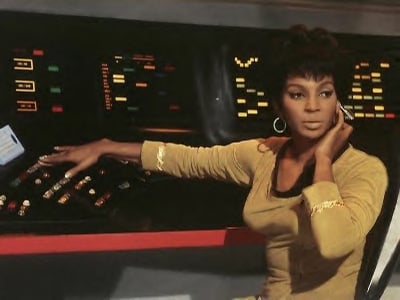
Pastwatch would also probably not be considered historical fiction, but would be an alternate history. There is the element of time travel, so it could also be consider historical fantasy or science fantasy. To split hairs, stories that include time travel should not be considered science fiction, but rather science fantasy, since time travel is generally not considered to be scientifically possible. Faster-than-light travel is also not considered scientifically possible, so works that included FTL travel would also be science fantasy. Yes, both Star Wars and Star Trek are science fantasy and not science fiction. You wouldn't actually be able to hear those non-existent explosions anyway since there is no air in space to carry the sound or make the combustion possible. Laser guns and perhaps teleportation (but probably only inanimate objects) would be science fiction since they are theoretically possible. Of course, annoying Bluetooth devices are here today.

There are lots of other futuristic elements that are also theoretically possible and fall squarely in the realm of science fiction. Traveling to distant reaches of space while in suspended animation or in giant ships that contain whole civilizations are thought to be possible with more advanced technology. Conversely, staying right here on Earth while being connected to vast computer network is also fair game for science fiction. This was the basic element of the Matrix series of movies, although that series ventured into science fantasy with its more mystical elements.

Personally, I thought the whole plot of the Matrix series was silly. Being educated as an engineer, I know that even advanced machines are simply tools designed by humans for use by humans. I have to assume that even self-aware machines would follow their basic design and programming. I think Morpheus's explanation for how the world of the Matrix came to be quite is unreasonable. It would be much more likely that two or more groups of people went to war with each other and started the destruction of the planet. I would assume the intelligent machines were thus designed the save the human race, and they probably concluded that isolation was the only possible way to protect humans from each other and as well as from themselves. Considering our current plugged-in society, I doubt there would be too much resistance to this permanently jacked-in state, particularly after a generation or two. Every person's needs were adequately met which is quite a contrast to our current reality. Of course, it is quite possible that my preferred explanation was actually the final resolution for the whole series, and I just missed it.

Friday, January 22, 2010

Tall Blue Ewoks

My girlfriend and I finally got around to catching Avatar. We saw it in 3D at the local IMAX. Tickets have been selling out, so I bought tickets online a few days earlier. We got there early, but we should have gotten there even earlier. We ended up on the third row which is too close for IMAX. At least it was better than when we saw the latest Star Trek movie from the first row of the IMAX theater.

As pontificated around the Internet, the movie is visually spectacular. The flora, fauna and terrain of the alien moon Pandora are quite imaginative, although the floating mountains strains my suspension of disbelieve. Despite the uproar from both sides of the political spectrum, the plot is unfortunately a predictable yawner. The political right is a bit upset that the movie glorifies the killing of mostly white American-ish soldiers. The corporate mercenaries could easily be exchanged for American Marines or even easier for modern-day corporate mercenaries while the native Na'vi could easily be exchanged for Native Americans, Vietnamese, Iraqis or Afghans. (Yes, I had to check Wikipedia for the proper term (i.e. demonym) for the residents of Afghanistan. I wanted the term to be "Afghani" which turns out to be the currency and language.) On the political left, the complaint is that Avatar is just another movie about a white guy saving the natives in the vein of Dances with Wolves.

In fact, Avatar really does seem to just be a remake of that Kevin Costner epic but with large blue humanoids playing the part of the natives. There is also a good dose of Apocalypse Now (Pandora seems a bit like Vietnam) and Return of the Jedi (primate natives fighting technically advanced invaders, just swapping the tall, blue Na'vi with small, furry Ewoks) and a healthy dash of Braveheart (again natives, both blue, fighting more advanced invaders). Of course, James Cameron seems to have something for Sigourney Weaver and mechanical, exoskeleton suits, just not together in this movie.